A better coordinated port.
A better outcome for everyone.
Every vessel movement depends on people, resources and decisions across the port. Horizon connects the information behind those decisions, helping operators anticipate problems, coordinate earlier and keep port operations moving.
Every port has a plan.
Not everyone has the same plan.
A port is many independent organisations, each with its own systems and responsibilities. Each does its job well. But when one plan changes, nobody's system shows what that change does to everyone else.
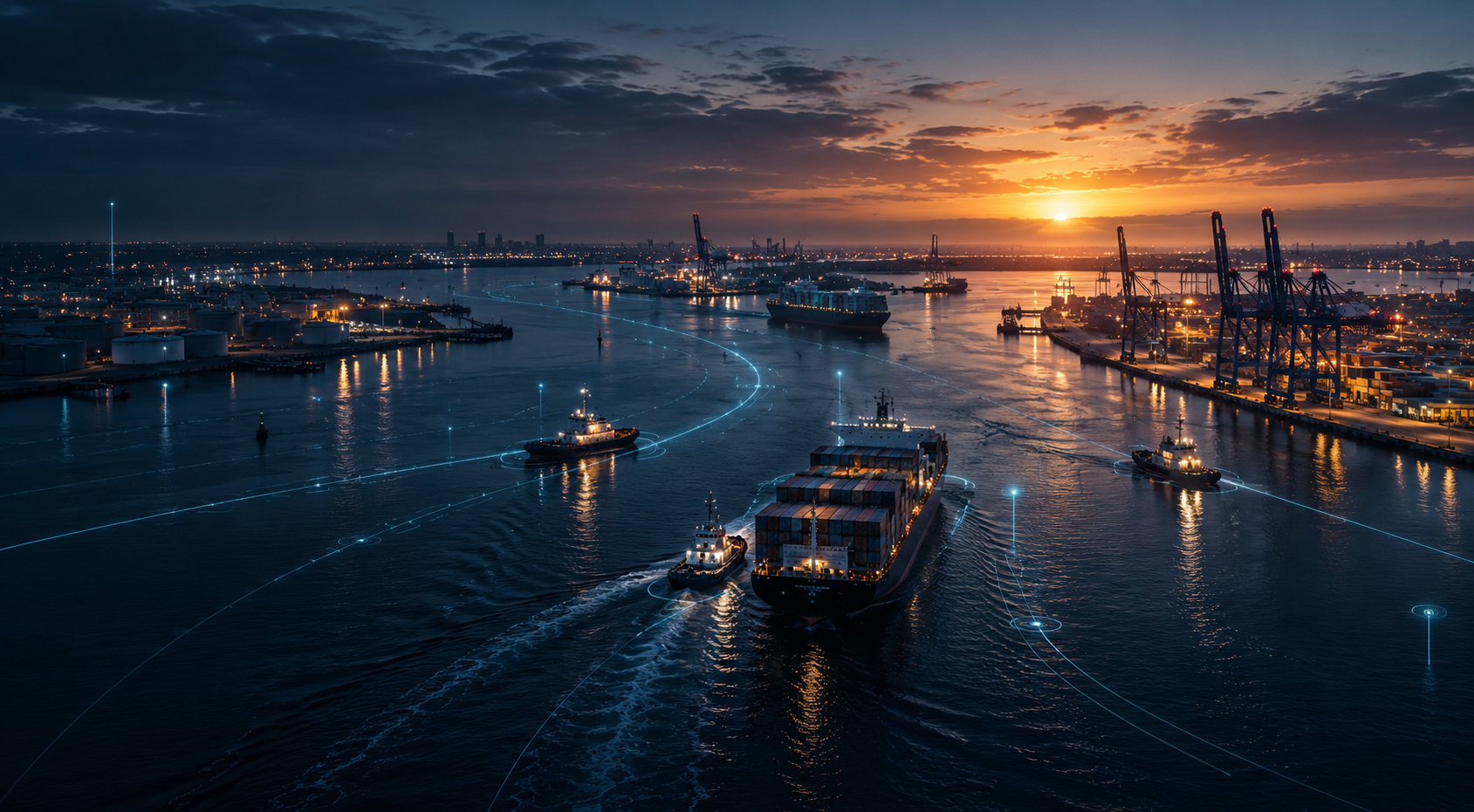
Container vessel · inbound · illustrative
Monitoring CORAL TRADER's approach. Every organisation's plan agrees.
The problem isn't that these organisations are doing their jobs poorly.
It's that no single system understands how a change in one affects everyone else.
One shared picture.
A more coordinated port.
Horizon brings together information from across the port and uses it to understand what is happening, what is coming and where plans may no longer align. It helps operators identify emerging issues, evaluate possible responses and coordinate stakeholders before disruption occurs.
A shared forward picture of the next hours of port operation, and the places where plans no longer fit together.
Bring the port's information together.
Draw on the systems each organisation already runs, without replacing any of them.
See where the plan stops fitting.
Identify changing conditions, operational constraints and potential conflicts in the forward plan.
Respond while there are still options.
Give operators what they need to evaluate options and coordinate the response.
See what happens when
the port works together.
See how Horizon connects vessel movements, port conditions and operational resources to help stakeholders anticipate changes and coordinate their response.
Request a demonstrationFrom knowing what's happening
to understanding what happens next.
Vessel movements, berth plans, tug and pilot schedules and conditions in one forward picture. Everything fits.
NORTHERN WREN's departure moves three hours later. Horizon finds a berth conflict at 16:00 and a tug double-booking at 17:00, five hours before either happens.
The operator knows a crane has failed, so B isn't possible. They choose A. The berth conflict clears; the tug clash stays visible for towage to coordinate.
● Decided by the operator, not by HorizonWhen the port works together,
everyone wins.
Each organisation keeps control of its own operation. What changes is that everyone plans against the same picture, so the information one shares becomes useful to all the others. Select an organisation.
The value isn't simply in sharing information. It's in understanding what that information means for everyone else.
Built around the people
who coordinate the port.
VTS provides the visibility needed to manage vessel traffic. Horizon extends that visibility into the wider port operation, helping operators anticipate constraints and coordinate the activities around each movement.
- 01See what's approaching.
- 02Understand what could affect the plan.
- 03Identify where decisions may be required.
- 04Consider the available options.
- 05Coordinate with the organisations responsible for carrying them out.
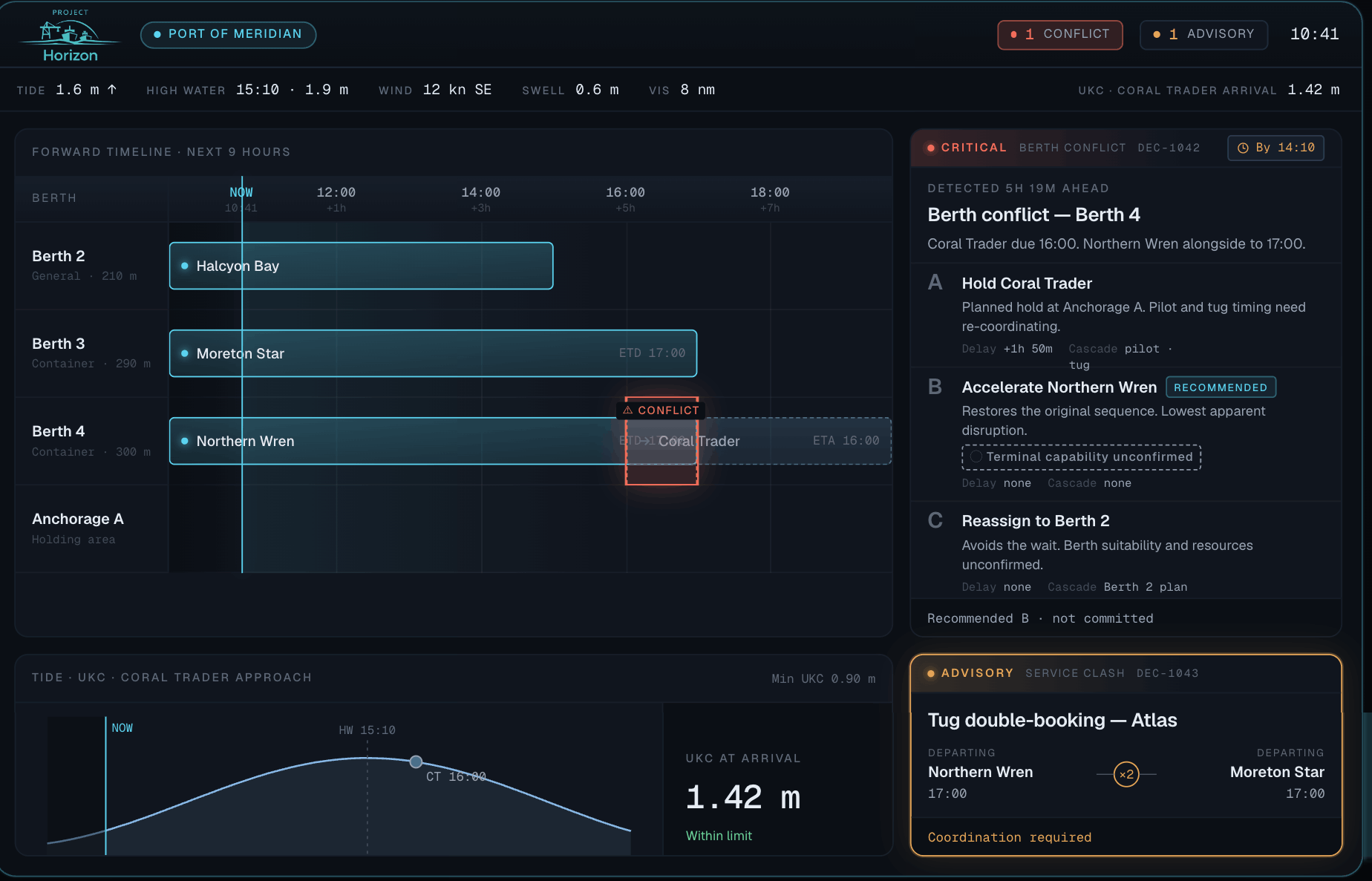
Port, vessels and data are illustrative.
More from the infrastructure
ports already have.
Ports must handle growing trade while maintaining safety, efficiency and environmental performance. New infrastructure is expensive and slow to build. Better coordination is a way to make more of what already exists.
Constraints seen earlier.
Earlier visibility of operational constraints and more informed decisions.
Better use of every berth.
Better vessel sequencing, resource planning and berth utilisation.
Less avoidable waiting.
Fewer unnecessary waits at anchorage and more opportunities for just-in-time arrivals.
Your systems stay.
Your coordination improves.
A shared coordination layer across the portYou don't need to replace every system in the port to improve how the port operates.
Horizon can be introduced progressively. Each organisation participates according to the information it can share and the systems it already has, and the shared picture becomes more complete as more of the port takes part.
The future of port operations
is better coordination.
We're working with maritime organisations to develop a more connected, predictable and efficient way of operating ports. Whether you're responsible for port control, pilotage, towage, terminal operations or shipping, we'd like to understand the challenges you face.
Prefer email? horizon-sales@ams.group